Thursday, August 2, 2018

Empowering students to own their learning


John Spencer's and A.J Juliani's book, "Empower. What happens when students own their learning" has come at the right time for me. 

With Chapter headings like;
  • Our job as teachers, parents and leaders is not to prepare kids for 'something;' our job is to help kids prepare themselves for 'anything'. 
  • Assessment should be fun. No, really, we're serious.
  • The system should fit the student instead of the student fitting the system.
it's easy to get a sense of the key messages within the book. Couple those key messages with some funky, non-traditional layout and this book lives up to it's title. 

The book itself empowers the reader.

A key message for teachers considering how to Empower their learners starts with asking:

What decisions am I making that students could make for themselves?

It's  a shift from a compliance mindset to a self-directed mindset.

So, how to get active learning? It doesn't happen by accident. It isn't about guiding from the side, it's guiding on the ride. Spencer and Juliani quote guides like Gandalf, Yoda and Ms Frizzle as examples of guides on the ride.
Remembering that when a student doesn't know what to do in Maths we show them, when they don't know what to do in writing, we show them, then the same needs to apply when a student doesn't know how to self-start or self-manage - we need to show them. We teach them along the way, when they signal they need help. (This might not come from the student actually asking for help)

We're sometimes fearful to "release" ourselves enough from what we think we need to do as teachers and that students who have choice in their learning can end up doing nothing meaningful, and I've seen this happen. (Think of the student who looks very busy on their device but achieves nothing).
A recent post called, "Swim a bit Deeper" offers some great ideas about how we can ensure students are involved in worthwhile self-directed projects of work.

So, where to from here for me? I'm thinking ahead to our next step in Inquiry learning at Winchester School and how we might move from Inquiry time to Inquiring classrooms. What will be involved in making this transition?

  • Teachers will need to have a similar mindset to mine.
    • Get copies of the Empower book for others to read
  • A 6 year journey at our school might need to have stages: Ignite, Launch, Explore.
    • Map what needs to happen at each stage to develop students who truly can own their learning
  • Work with staff to develop "smorgasbords" for independent learning activities
  • Model this approach through the professional learning programme for teachers
    • How might I give choice and ownership to teachers of their professional learning?
It's a bit of a scramble of ideas, but from this will come clarity as I think through my reaction to the "Empower" book.

This self-starter is under way.
(Read the book and you'll get it)


Wednesday, October 18, 2017

Developing a local curriculum (At Winchester School)


How to review a school curriculum.
This writing outlines some of the processes undertaken and explains some of the decisions made when reviewing a school curriculum. Others wanting to review their own school curriculum might find our journey useful.


This year I was appointed principal of Winchester School situated in Palmerston North. Our school curriculum was reviewed with our school community.


The New Zealand Curriculum Identifies five Key Competencies:
  • Thinking
  • Relating to others
  • Using language, symbols, and texts
  • Managing self
  • Participating and contributing


In addition English, the arts, health and physical education, mathematics and statistics, science, the social sciences, and technology are identified as the learning areas. So the question is asked, Which is the most important? Knowledge or skills?


Shane Kennedy’s post, ‘Curriculum, the culprit?certainly caused me to pause and think more deeply about what is most important. In deciding what is important we often turn to measures of academic performance, and the Programme for International Student Assessment (PISA) has been a favourable measure by many who make decisions about education in our country. If however, we change the lense by which we judge the outcomes of our education system, then we might be surprised by what we learn about our students and what we see as a result of our system.


  • What if student well-being or happiness was the most important outcome?
  • What if we judged the success of our education system on what we observe in our society?
  • Have we got our priorities right?


Content or knowledge teaching
To clarify, I do believe in content or knowledge teaching because there is a time and place for us as teachers to impart ideas and clarify understandings. However, if all we do is teach content, then we’re neither fulfilling the full vision of the New Zealand Curriculum, nor are we equipping our students with all the necessary skills that they will need to actually ‘cut it’ in today’s society. Also, who decides what’s most important or what will make our youth most likely to succeed?


The only way to really know is to ask your school community. I interpret this as developing a local curriculum.  That is, one where our school’s community has decided what will be prioritised. In New Zealand we have the autonomy and the freedom to develop our own curriculum and to decide what we believe is most important for the students of our schools. Asking our community what they value above all else determines what we focus on. And what is focussed on gets achieved.


We’ve placed Key Competencies as being important within our school curriculum. When I had been principal for a few weeks at my current school, I simply asked, “What kind of learner do you want your child to be?
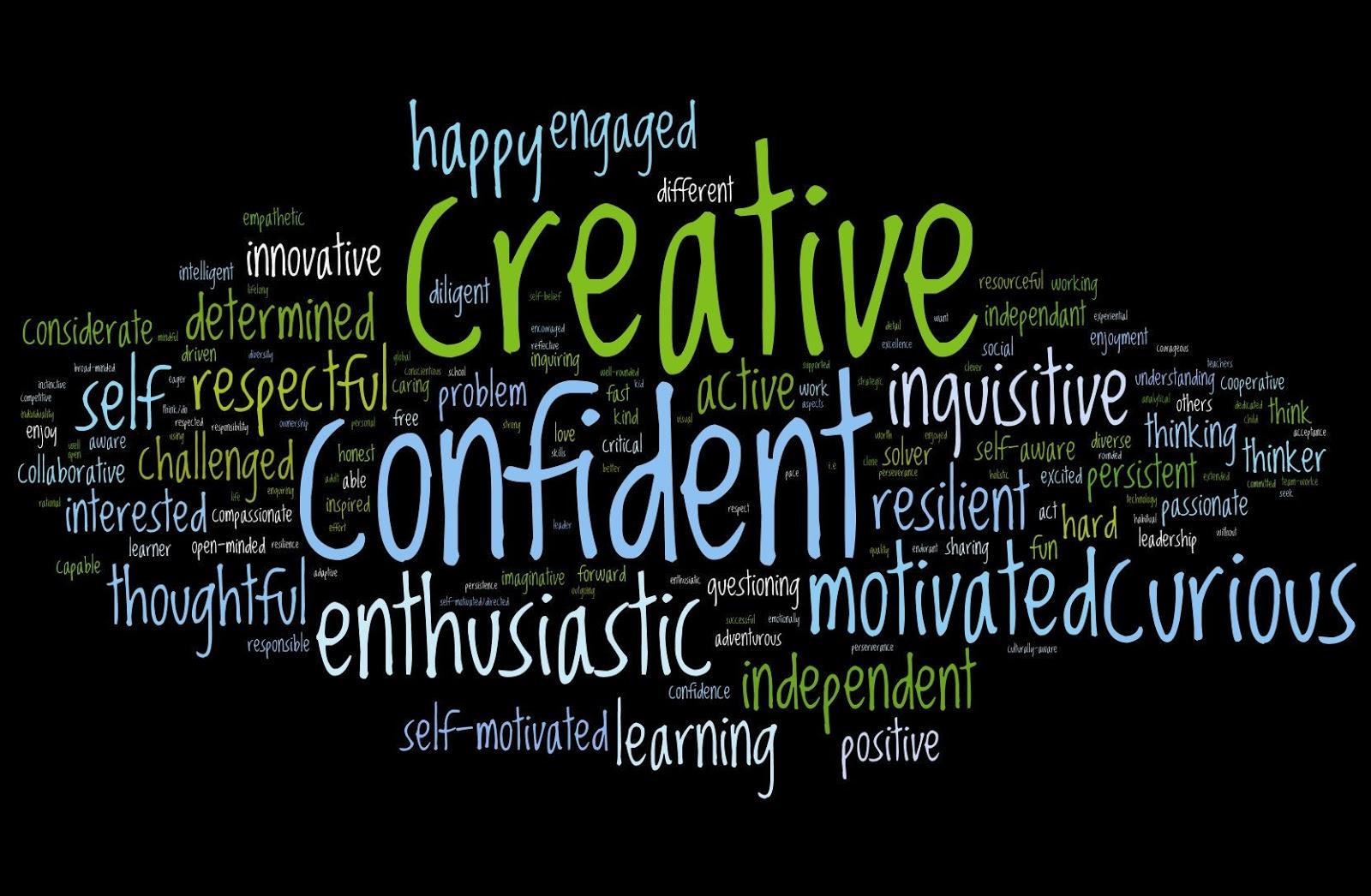
All responses were wordled and the following image helped us see what our community wanted.
IMG_20170306_110140.jpg


There was some initial alignment to Michael Fullan’s New Pedagogies for Deep Learning work which has 6 competencies: collaboration, creativity, critical thinking, citizenship, character and communication.
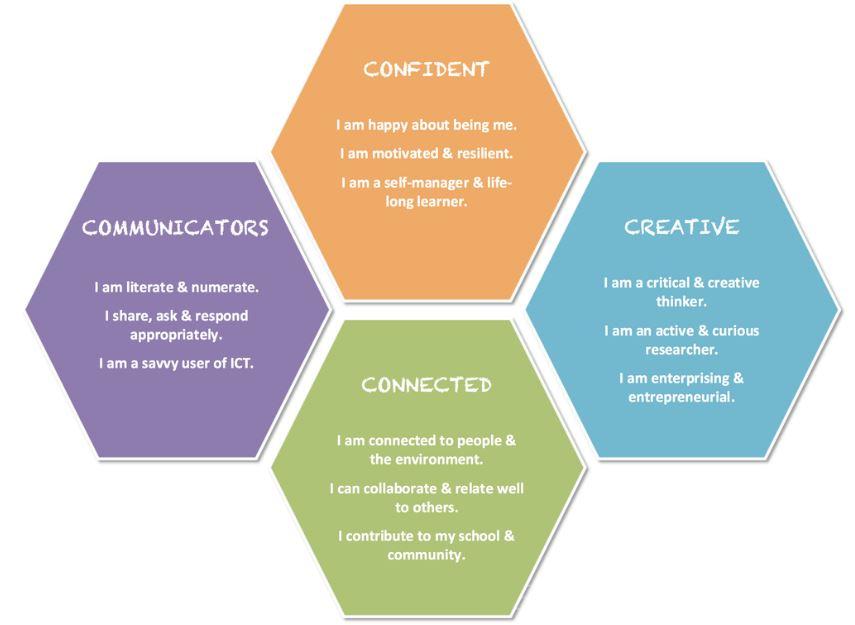
After further consultation with the community, staff and students, we’ve decided on our outcomes for Winchester School.


Capture1.JPG
Students, teachers and parents were consulted as to what they considered to be important to learn about. As the outcomes emerged it was important to consider what we learned about and how this would support our outcomes. For example, in the wordle above, our community indicated that we want our children to be confident.  Therefore we have to consider what learning experiences will enable this outcome to occur.


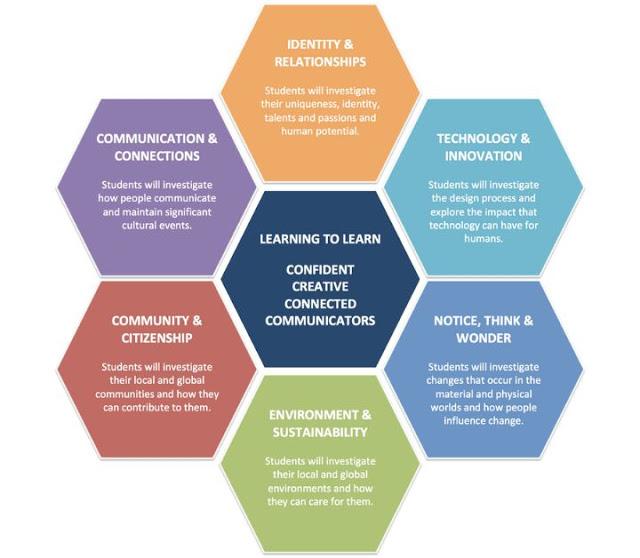
Using an Inquiry approach to learning became apparent because this would support our prioritised outcomes. These ideas were coupled with our outcomes and then the New Zealand Curriculum was considered again to ensure all learning areas would be explored by our students.


A Local Curriculum
Developing a local curriculum is important because the process consolidates what each school does. A local curriculum should not be about cutting anything out, but rather highlighting what is most valued from the school community's perspective.  A local curriculum enables a common language to be developed within each school and is the framework for planning. The review process gives a focus and a reason for doing what we do. Considering what the NZC states and ensuring that all learning areas are included is also an important part of the process.


Our New Zealand Curriculum places a heavy emphasis on the Key Competencies and some critics would question how these outcomes might be measured. Questions asked could include, ‘How will our school know if students are improving at being Confident or Creative?’ This is a fair question. We are embedding our outcomes into reporting to parents so that progress and achievement can be seen over time. We are developing key descriptors for each of our four outcomes so we can report against those.


When placing Key Competencies so importantly within our curriculum, a key component in knowing whether students are developing their skills will be teachers observing students. Kath Murdoch has a term for this; release. She names "release" as one of 9 key teacher attributes in her book, "The Power of Inquiry".
A teacher who can release themselves from the learning process for periods of time is able to observe what is actually happening in the class.


There are many facets to consider when developing a local curriculum. I've outlined the thinking to date and wonder what we might not have considered so far. The opportunity to write about this recent work was well timed. It has allowed me to reflect and to justify the decisions that we've made.


I hope that outlining the process we undertook is useful for any reader considering what process they might use as they review their own school curriculum.


References
Fullan, M., McEachen, J., Quinn, J. (2016). New Pedagogies for Deep Learning. NPDL Global Report. (1st ed.). Ontario, Canada: Retrieved from http://npdl.global/wp-content/uploads/2016/12/npdl-global-report-2016.pdf


Kennedy, S. (2014, March 05). Curriculum, the culprit? Retrieved October 15, 2017, from http://educationcentral.co.nz/curriculum-the-culprit/


Ministry of Education (2007). The New Zealand Curriculum. Retrieved October 15, 2017, from  http://nzcurriculum.tki.org.nz/The-New-Zealand-Curriculum


Murdoch, K. ( 2015). The Power of Inquiry : Teaching & Learning with Curiosity, Creativity & Purpose in the Contemporary Classroom. Melbourne Seastar Education


Tuesday, June 6, 2017

Personalising the learning app


I think there's still a bit of confusion for some over the term "personalising" learning. 

“Make Learning Personal” (Bray & McClaskey, 2015) states that in a personalised learning environment, “Learning starts with the learner. Learners understand how they learn best so they can become active participants in designing their learning goals along with the teacher. Learners take responsibility for their learning, they are motivated and challenged as they learn so they work harder than their teacher.”

The challenge for us educators is to find how the system can fit the learner, rather than the other way around.

I've come to think of it like the Stuff App. Here I'm able to personalise my news feed and scroll past the stuff that's not relevant. I can change my view to compact or expanded and I can select local news or whatever category I wish to include. Some might take this for granted but when we think of how News has evolved over time, this app approach certainly allows for personalisation compared to the news on TV. 
When watching TV News, we have to wait for the parts we're really interested in and sit through all the irrelevant parts. Even in a newspaper i'm able to skim over the stuff I have no interest in - although I've had to pay for the whole paper!


I guess a lot more media is heading this way - how many under 20 year olds actually watch "free to air" TV? I'd suggest not many. They've become accustomed to viewing what they're interested in, be it on youtube, or paying for a TV series they can download and watch immediately, rather than waiting for it each week on TV.


So, how might this apply to education?

How might we enable students to pick and choose the parts they need and want rather than having to wait for the "newsreader" to get through all the boring bits or having to wait for the weekly instalment?

Why not let our students download what they want, when they want and have a more personalised experience?

Tuesday, May 2, 2017

What's the point of School?

Professor Guy Glaxton posed this question in the title of his 2008 book, "What's the point of School?" It's a punchy title that contains a huge question!

I've been writing a section for our school website called, "Our Future Direction" and I'm using this to ask largely rhetorical questions of the parent community at our school. I'm drawing attention to this via the school newsletter and am hopeful that people are considering the ideas ahead of some consultation that we will have about the future direction of our school.

I've come to this. What is the point of school? Things have got complicated. Really complicated. So, it's important to remind oneself of the moral purpose of what I'm doing. For me, and I hate to sound like a Miss World contestant here, but I do want to make the world a better place and to have world peace.

We need to consider what's really important here. What do we value most in education? In school? What are we all about? Why do we do what we do?

Watch the clip below and ask; why do we do what we do? What's the point of school?


Wednesday, April 19, 2017

Making it make sense

I'm so close to making it make sense that I can almost taste it. It's right there and it's becming clearer and clearer how to bring the parts if my school's curriculum together.
Context is that I've had 3 terms leading at my current school and I'm slowly getting my head around it.
It happens in phases. It has to. It goes like this. Phase 1: observe and ask questions.  Get to know people. Build trust. Build relationships. Be real. Give it time.
Phase 2: systems.
Phase 3: curriculum. Learning.

I'm almost out of the systems phase and have now got the head space for phase 3 and it's about time!

We have a pretty good curriculum.  It almost makes sense to me. I've inherited it and some aspects are taking me a while to fully understand but I'm respecting the fact that some good decisions have been made before my time and that it makes sense to others. By observing and listening there are so e loose ends that need bringing together.

And that's the work we're about to embark on. It'll involve everyone. It'll be messy for a while. It'll be challenging for some. It'll be rewarding.

We need to sort our learner profile.  Note learner not graduate profile. It needs to be about now not 6 years from now.

We need to know what we want our learners to be like and why. Is the ability to move quietly in single file from point a to b still important? Is neat handwriting valued or a thing of the past? Is critical thinking something we value? If we really want our learners to be creative, how might qe really give effect to this?

Once we have our core skills named then we can match the contexts from our rich curriculum to those. E.g. traditions, culture or entrepreneurship might fit under a "confident " type banner.

I've found viewing "Most likely to Succeed" again an inspiration and this clip here very thought provoking too.

https://youtu.be/1ZbGlDMF7HQ

I am looking forward to getting back to my desk and planning ahead for term 2. Talking with learners about what they want the school to be like and what they want to learn about is going to be interesting. 
Asking the same of parents and staff will be too. My job is to bring it all together and identify if we have any gaps.

Thursday, August 4, 2016

The new guy.

I've begun at a new school as Principal after 7 years at my first school as Principal. I've moved from a rural U3 school to urban U5.

I came home from day one and felt pleased I'd had 7 years experience to equip me to deal with day 1. I'm nearly 2 weeks into it. It's been a blur. It's exciting. It feels right. I'm being well supported and made to feel so welcome. i'm aware there'll be a honeymoon period.

I was welcomed officially by the school through song, some short speeches and flowers for my wife and a book for our 2 year daughter. Nice. Meet a prospective parent. Time in rooms. Chat to some students. Lunchtime. The afternoon whizzed by and I then went out and farewelled everyone at the front gate. Board meeting that night and it was over.

This week I've been having 30 minute one to one chats with each staff member. We're breaking ice and talking about things that have come to light from a self-review sheet I gave out at Teachers only day in the school holidays.

I'm learning lots. Asking questions. Trying to contribute and take the lead. I know nothing is really going to happen until I get relationships going, send some time and build the relational trust. Everyone gets it. Time. Energy. And more time.

I came in feeling a bit sorry for the school to be honest. 20 years with an outstanding leader and a staff that have been together for a long time. And then, BOOM, me! I was worried that it would be strange for them, I'm sure it is. I was worried that they'd worry I would come in and make all these changes. I said reassuring things to let them know that I'm more about evolution than revolution, so they needn't panic.

I had an epiphany today. It's not them that will change as much as what I will. Everything's new for me. It's the same for them, apart from me. It's a different person, and yes, I'll have a different way and different strengths and weaknesses, but things will be the same, for a while anyway. I will change though. Far more quickly.

Wednesday, June 8, 2016

Is school just preparation for life?


I kind of understand what people mean when they say that school is preparation for life, that primary school is preparation for secondary school (and therefore secondary school must be preparation for university and so it's university that is preparation for real life). And I guess that means that kindy is prep for school.

My problem with this chain of thinking is that it belittles the significance of the "now" in each instance. What is happening now is important for each learner and is real life to them.

I tend to agree more with Dewey's quote above. The power of this way of thinking is that rather than viewing our work as preparation for the next stage we must consider what will make learners successful now. By guaranteeing their success now, we are probably guaranteeing their success later too. And by success I don't necessarily mean achieving NCEA or going to university.

When I consider what I would deem as being successful in life, I tend to think that someone is doing something they are passionate about, that they have chosen to do (not forced into or fallen into by default), that they treat themselves and others well, that they can contribute in positive ways to their community, they're happy (content) and they have a positive view of themselves.

We must consider if what we are doing is ensuring that learners of all ages are being successful in their life now, not just later.

My belief is that they Key Competencies of the NZ Curriculum are the essential ingredient in the recipe of ensuring our learners experience success both now and in the future. Are our classrooms based on teaching these competencies and allowing authentic opportunities for learners to practice and demonstrate these?

In order for schools to fulfil the vision of actively involved, confident, connected and life long learners then Key Competencies need to be at the fore of our thinking in curriculum design and school culture. It would be pointless to have learners who can only relate to others sometime in the future and who can manage themselves at some later point in their life. Surely, to be successful at school then learners need to be competent at these skills as soon as possible.
Think about your "ultimate learner" or what your top 3 outcomes are for learners in your class or school and then ensure that your class/kura is enabling learners to become capable in this now, not just in the future.


Monday, May 16, 2016

Reimagining me! Impact from #NYLD16

Today I attended the National Young Leaders Day in Palmerston North along with 2500 others. We were treated to some short and punchy speeches from a variety of people, involved in a range of activities who each delivered their key points about what they've learned from their experiences- sometimes from a leadership perspective but mainly from a human perspective.

The main messages were not just for "young leaders" as an older leader at my school I took away a lot. The main reminder I got was about passion.
No matter what walk of life these speakers came from they were so passionate about what they're doing:
Billy Graham - Boxing - "Everyone's got talent, most people never go looking for it" 10% talent. 90% hard work.
James Back - Attitude - The easy thing to do isn't always right, and the right thing to do isn't always easy."
Brylee Mills - Dancer - Don't let challenges stand in your way. Everyone has challenges"
Johnny Wilson - Goodtime Music - You don't have to be the best, just try your best. Focus less on others and how good they're doing - focus on your own race."

So, important messages here for young and old. Back to passion. This was my takeaway.

I've forgotten about passion I think. I'm a passionate person I've come to realise. And in my role as Principal I may have fallen into the trap of being and behaving as I think I'm expected to. I've had to do a lot of stuff that takes me away from the things in education I really am passionate about. Have I got so busy in the day to day stuff that I've forgotten what I really think school is all about?
I love music and singing. Yet, how much of this happens in our school? Today there was a group of 2500 singing - it was moving. We watched stirring video clips, beautifully put together with moving music - you'd have to be a robot not to be effected on an emotional level.
I heard messages about problems that really need solving- environmental and war crisis situation. How involved am I in any cause? How often do I encourage others to be involved. When did I get too busy to care?
I saw beautiful dancing from Brylee Mills. I heard beautiful music from Avalanche City. I saw many students having a great time, swinging arms to the music and going crazy. Not all, but most. Caught in the moment. Having a great time. Who knows what messages they took away from the day. I'm looking forward to talking about it with the House Leaders I took today.

I have an opportunity, as I take up a new leadership position at a new school. I can be the passionate individual that I really am. Be the animated person that is the true me. My true self got interviewed and offered the job, so why not carry on being me. I want to ensure that students in any school I am part of have the opportunities to pursue their passion(s). Is this more easily done in a larger school where there are more staff to offer these?

What part does my leadership play in ensuring that learners can follow their passions? A huge part. My passion for education runs deep. I must ensure that "my" school is one where passions are encouraged whether it be sport, dance or saving the world.

I must reimagine myself again and take the opportunity presented to me.

Tuesday, March 1, 2016

Health and Safety - it's about people

I belong to a PLG with 4 other Principals and we are lead by an experienced consultant who today raised the issue of the new Health and Safety legislation and what this means for us as Principals, as Boards of Trustees and for our schools.
After plenty of discussion about the role of the Officer around property and hazard registers, we were asked to consider also the mental health and well-being of everyone in our school, especially the teaching staff. How is their well-being looked after? What do we do as leaders to model healthy work-life balance? What do we do if notice that someone is stressed?
In today's age when we're all potentially "available" 24/7 how do we ensure that teachers are not burned out or stressed.
It was a timely reminder that health and safety is about people, not compliance and it goes way way further than hazard registers.

Our work is in developing a shared understanding with staff and with Board members so that everyone is involved, understand their roles and see this as being a culture shift.

There were timely reminders today. Health and Safety does need to be viewed differently. It's about people and goes further than just their physical safety.

Monday, October 5, 2015

#edblognz Challenge 2

  1. Write a blog post about an education question/ challenge/wondering that you have or are facing. You don’t need to have the answer/solution.
So here's my post, via my question. (This will only work if people respond!)

WHAT WOULD BE THE IDEAL PROFESSIONAL LEARNING PROGRAMME FOR YOU?


Monday, September 28, 2015

Week 1 challenge #edblognz

Think about your teaching practice. How has it evolved over time? What are you currently working on developing in your practice? What tools have you used during this inquiry time?

I'll talk about an aspect of my leadership, as I move towards 6 1/2 years of being a Principal. What has been the most significant change in my leadership is the areas that I pay attention to. When I first became a Principal it was all about systems and getting things working in a way that made sense to me and for staff. While the systems in our school continue to evolve, my attention is more about how I can meet the learning needs of my staff, so our learners benefit from having "expert learners" as teachers. My role in this varies. Sometimes it's about creating the conditions or the culture. At other times it involves getting deep in the mechanics of a particular aspect of practice.
Like others on our staff, I'm employing surveys more often to inform decisions and gathering more voice.
An example of this has been around our professional learning programme where I have wanted to personalise things more. I'd wondered if this was working for staff, so put together a survey (using google forms) and asked everyone to respond. I've shared the results and we have a meeting in week 1 next term to discuss and make some joint decisions.
Like a classroom teacher, I'm constantly asking myself, if I see evidence of learning. And like a classroom teacher, involving the learners in the process and in the decisions.
I'm looking in particular at a couple of work ons from our last ERO report and asking teachers if these are areas they want to work on more. I'll need to ask our learners too and take that voice to the staff to help guide our decision.
A key question will be, "How might we meet individual learning needs through our professional learning programme?"

Thanks to who ever it was that first shared the "How might we..." questions. The first time I heard of this was from Maurie Abraham http://principalpossum.blogspot.co.nz/ -a leader who I find inspiring and challenging and whose posts I always check out.


Tuesday, August 25, 2015

Personalising professional learning

The #BFC630nz twitter chat (which I usually browse over as I eat my breakfast, because I don’t function properly at 6.30am) from this morning has really got me thinking about what I hoped would be an effective way to go about professional learning for our staff this year.
I saw a number of tweets from teachers wishing they had input into the content of staff meetings or some choice about them.I can relate.
Previous posts of mine talk about the hit and miss of most staff meetings I have attended or lead. In response to this and wanting to personalise the learning experience for my staff, we have run “Professional Learning Groups” rather than staff meetings each fortnight this year.
Each teacher has been asked to lead something and it was up to them to work out how much time they might need depending on what they wanted to achieve.
My thoughts were that a PLG might run for a term, or for a whole year. The frequency of those meetings would vary too. A PLG might meet 5 times across a term, or 5 times across a year. It would depend entirely on what the goal was.
I wanted all teachers (5 plus me) to experience that leadership role. It didn’t mean they had to be expert in something, but be prepared to facilitate. I left it open as to what staff might choose to lead. ( I need to point out, we’re all experienced teachers and have been together for a few years, so there is already a high level of relational trust)
At the start of the year, it was a bit like an Educamp, for those of you who have been. Staff pitched an idea to everyone else of a PLG they would be prepared to lead. (They also needed a second and third option too, just in case no-one was interested in the first idea or 2).
From memory, each teacher had their first idea generate enough interest to make it worthwhile.
I was away on sabbatical the first term when these new initiative was established, so I wonder if I’d been present that things may have unfolded differently.
I also surveyed the teachers using google forms to collect some initial thoughts about how they like to learn, what they wanted to achieve with their PLG and what potential barriers they foresaw.

So, what have I seen and what has happened so far?

I think there has only been one occasion when a staff member didn’t come to a PLG. Perhaps old habits die hard, or perhaps what’s being offered is meeting people’s needs. Either way, pretty much full attendance. There are 2 time slots. 3.15-4pm and 4-4.30pm. (We finish at 2.50pm, so teachers have 25 minutes before meetings start)Teachers book up on the shared doc in advance. I send out a short email prior to each PLG I lead to give  a heads up on what’s going to be the content, so people come along prepared, or could choose not to come.
Some PLGs have been one offs. This wasn’t my intention, but it met some needs. I think a PLG offered over time would probably have more long lasting effect and would offer better support. I haven’t made up my mind fully one way or the other about one offs.
Teachers do seem more interested and invested. I have no way of measuring that other than observation and from listening to people talk. It’s certainly been way more collaborative than it used to be.

Topics covered so far: Accelerating learning in Literacy, personalising learning, mask making for wearable arts, boys ed, Reading Eggs, Pond, eAsttle, Sign language, RTCs/Appraisal.
These are quite different to what I thought might be offered. My intention was to have PLGs based around identified learning goals from end of year appraisal meetings. When I look at the list above I can see that’s it’s been rather disjointed.

The #BFC630nz chat this morning had @karyngra tweet this - “Personalised Teacher PLD combined with whole staff vision building, definitely effective”.
This has prompted me in to thinking more deeply about the vision aspect and the importance of everyone having input into a collective vision.

I refer to the “Model for Managing Complex Change” adapted from Knoste, T (1991) to work out what piece might be missing if I see something not working when dealing with change:

Vision+Skills+Incentives+Resources+Action Plan = Success.

Some people have added Relationships to that as well. I wonder if our PLGs were just my idea and broadcast rather than investigating if this is the approach that staff actually wanted. (The survey results certainly supported the move however) Perhaps I didn’t do enough around the vision aspect initially. As far as Skills go, this is where coaching comes in. Some have asked for it, others I’ve approached to see if any was needed prior to the PLG. Perhaps action plans have been missing too. I developed one for my own PLG goal as it was part of something bigger across our school. Perhaps there needed to be the expectation that a PLG would have a minimum number of sessions.

Another tweet that caused “a stir” in my brain was this one - “Please don’t refer me to the charter brick I had no input in” - there’s a challenge for leadership! And well put too.

In learning more about taking a personalised approach, I read “Make Learning Personal” by Bray and McClaskey.
Their continuum of the expert learner (and this is what I want for the teachers in my school, to be, expert learners) looks like this:

Voice⇒Choice⇒Engagement⇒Motivation⇒Ownership⇒Purpose⇒Self regulation

“When learners include their voice and have opportunities for choice, this changes how they interact with the content, the teacher, and each other.”

This has significant implications for the way in which traditional approaches to PLD have been taken. Without authentic Voice there really isn’t Choice. I had to allow staff to generate their own ideas for PLGs, because if I’d made up the list based on school priorities and then got people to choose from there, they would potentially be choosing from a list they didn’t really want anyway. (much like my Mum saying I could have broccoli OR brussel sprouts - is that really a choice Mum?)

I promised an honest post. I will lay my cards on the table at this point. Another reason I have taken this approach to professional learning for staff, is that this is the way I see our classes running and I need to illustrate this for staff. I want to show the process I went through - collect voice, allow choice etc. I cannot and will not expect my teachers to implement change without being prepared to change my own ways of doing things.  It needs to be systemic and “unbundle” traditional approaches. (Thanks Rachel Bolstad for that term, I love it).

So, where to from here? What plans and thoughts do I have for next year?

I believe that a personalised approach is the way to go. When I see what is happening for learners in our classrooms I am blown away. Must dos and Can dos are the developing common language across the school. Staff certainly seem more invested and motivated around professional learning.
I should also add that I free up funds for each teacher to use to support their own professional learning and our teachers only day for the past couple of years have seen teachers going out to schools of their own choice to meet their own learning needs.
This has generally been well received and I have been in awe of the learning and action that has occurred after these visits. I think there is benefit in 2 teachers going to a school together, as the talk between people and ongoing support is important, but not at the expense of someone tacking along just to make that happen. Remember, Voice, then Choice, not just Choice.

I think we’ll carry on with this approach but perhaps couple it with some school wide stuff too. (Our school wide focus this year was being Year 2 in ALiL). But the school wide stuff would still need to be personalised. As long as each teacher can identify goals to work on, rather than all working towards one goal, then it can be personalised. A rubric can help with this showing development of skills and goals.

I have 5 staff to lead. I wonder if this approach can/could work in a big school. What would it look like? Is it possible? Would it be wanted?

Enough. I’m exhausted. Thanks for reading. Cannot wait to hear some responses.

Thursday, July 9, 2015

What's most important - Teaching or Learning?

Over the past twenty years that I've been in education I think it's fair to say that the focus has been pretty much on the teaching side of things, not so much the learning side of things. Perhaps this is because we can really only truly control the teaching. I believe that learning occurs in the brain and therefore, I am unable to get inside the brains of the learners I work with. What then can I control? Quite a bit really; classroom environment, giving feedback,  using learner voice and giving choice and so on. As teachers we have plenty that we can control and over my time in education we have focused a lot on these things. A lot of money and time and effort, blood, sweat and tears have gone into the teaching of many different learning areas.

I'm wondering if we need to focus on learning, as opposed to teaching. Perhaps rather than teaching strategies it is learning strategies that need attention. I've worked with countless teachers who create wonderful conditions for their learners and despite everything, some learners just don't make (necessary) progress with their learning.
There's a bit of attention being given to how the brain works and we're getting better at talking with learners about how they learn best. I wonder if we need to further our work in understanding what effective learning strategies are, rather than effective teaching strategies.

I welcome your thoughts and ideas.

Tuesday, June 16, 2015

Our incredible staff

After a  long morning at my PLG  today, I wasn't too sure how I would get on sitting on for another hour and a half while we shared back about our teacher only day experiences. I couldn't have wished for a more engaging session. I couldn't be more proud of each person, the way they had prepared their thoughts and the thoughtful questions following each talk. We are all deep in our own learning pit. It's  fascinating hearing people make sense of their learning and establish their own next steps right in front of us. To date this year, it has been my favourite moment at school.

Two weeks ago we had all gone off in different directions visiting people that would support our professional learning. At this point in my post I must point out that staff had been given freedom and a budget to go wherever their funds could take them. Two of us ended up in the same schools, everyone else went different places. Schools visited were Tamatea Intermediate and Richmond School, in Napier, Parkland  School and Whakarongo School in Palmerston  North, Parkvale School and Mahora School in Hastings, Tokomaru School and Shannon School in Horowhenua and Resource teachers of literacy in Feilding and Palmerston North. I shared about my experiences, thoughts and wonderings after visiting schools in Christchurch - Hallswell, Waitakiri, Pegasus Bay, Clarkville and Breens  Intermediate.

Why not take the whole school staff to the same place? Because I don't believe this would have met each person's learning needs. It also would not have led to the diverse range of experiences, thinking and follow ups. Through having choice, engagement followed. Teachers were highly motivated because they could choose something that was relevant, topical and meaningful to them. They weren't having to tag along because someone had organised the day for them. I won't keep going on - those leaders who are implementing personalized learning in the school, I hope, are extending this pedagogical approach to the adult akonga in their own places of learning. We know that young learners enjoy having choice and adult learning theory supports this approach too.

While the majority of our experiences were supporting our work to implement personalized learning, so many other outcomes have come from these professional learning experiences. Thank you to the schools and people we visited. If we are able to action even some of the many, many ideas that came from our experiences, our school and therefore our learners will benefit greatly.

Thank you to the incredible staff at our school. Today was a highlight.

Monday, June 15, 2015

Measuring what we do.

A question I asked as part of my sabbatical was how schools are measuring the impact of the actions they are taking in personalising learning.
For me, taking a personalised approach supports the development of the KCs - so we needed to establish a starting point on how we might monitor learner progress in relation to becoming more skilled in the KCs.
Our school has a strong and relevant model that brings KCs and values from the NZC together.


We needed to add clarity for our learners so they could see what each of the "flags" really meant and then how to improve in each of these key areas. We've introduced the terms; dependent, assisted, independent and self-guiding to categorise the stages that learners might move between as they become more competent.

Teams have developed rubrics that allow learners to see where they are on the Bridge to Life and learners have used this rubric to self-assess and place themselves in their 'best fit' stage.
It's an exciting development for our school - we have some common language that extends across the school and clearly shows a progression for our learners. It's a great starting point and I know that these will be refined and further developed over time as we use them more. Each class has these displayed and classes have adopted different ways of having learners "show" where they fit best, and therefore what their goal is in becoming "the best me I can be".


The rubrics will be a tool we can use to monitor learner progress and hopefully as evidence that our approach is further developing learner capability in the KCs. By gathering in sheets that learners have assessed themselves on and tracking them over time, we will be able to see if they are progressing or not and also establish if the rubric is learner friendly.


Monday, May 25, 2015

Could we be missing Something?

We're talking about effective practice and how to best meet the needs of our learners. We're looking at how to develop self regulated learners in single cell classes. Evidence available from australia.teachingandlearningtoolkit.net.au/toolkit shows that meta-cognition and self regulation along with feedback as having high impact on learning and achievement.
So we're wondering how to best create the conditions that promotes these outcomes. We're currently pursuing creating self-guided programmes in single cell classes. We are working on having greater learner voice and choice, through having must do and can do activities within various aspects of our programmes. Learners will be involved in the development of some of the learning activities.
Having just come back from a trip to Christchurch that focussed on collaborative teaching approaches, I'm now wondering about the "power of more than one".
We were reviewing our moderation practices today and then I gave a quick report from my trip and the link was made between the two - with more than one teacher about, moderating would be enabled on a more frequent basis, there would be ongoing moderation as learners are discussed between teachers.
I am learning more and more about personalising  learning and collaborative teaching. I am learning about more advantages for both teachers and learners in taking a collaborative approach in an "innovative learning environment". Such ideas as a learner not connecting with one teacher might be avoided in a space that has more than one teacher, learners might gain different perspectives on the curriculum. Teachers worry about not knowing their learners so well. I know this is a real concern in many schools and one parents might have too - who is actually looking out for my child?
We don't feel we know enough yet about this to implement it successfully and there is a high level of angst in my community about taking this approach. So currently we're  looking at how we can ensure our learners are offered all they can be in a single cell setting.
If there's  one thing I hear over and over again, get the pedagogy right, then go from there. We have work to do to ensure that our classes are running how we want, that we all share some understandings of what we are wanting to achieve and how to go about achieving that.
Perhaps some teachers will select to work in a collaboration in the near future. In the meantime, we need to get our pedagogy right about enabling learners to be self guiding and self regulating.

Sunday, May 24, 2015

A lasting impression

We all know that schools are called upon to do special things on a daily basis. The staff in many Christchurch schools have been called upon to do the extraordinary. 48 hours, five schools and one outcome. Respect. I went to learn about collaborative practice and certainly came away with way more knowledge and ideas around this, I also came away with something I wasn't expecting and something I wasn't prepared for. Hearing what different schools had done for their community following the quake made me realise even more how vital schools are to their communities, they're more than places of learning. They can be a refuge, solace and a hope.
The leadership that principals must have shown over the past few years is something rather special. Having a new build on top of everything else is something to look forward to but also so much more work in the meantime. Split campuses, shared campuses, no campus at all. The e,optional needs of staff, children and parents,  as well as turmoil in their own lives and it's  a wonder how many kept going. It really is.

So, thank you to Halswell School, Waitakiri School,  Pegasus Bay School, Clarkville School and Breen's Intermediate. Thank you for welcoming us so warmly, for sharing your story so openly and for what you have done. Meeting you all has been a privilege. Learning from you has been an inspiration.

Note- I was one of ten Principals from the Manawatu who visited five schools in Christchurch over two days. Brilliant trip.

Tuesday, May 19, 2015

Our approach to professional learning at our school.

We're trialling something new at our school to support professional learning. Professional learning networks have been offered, with each staff member leading one. I lead my first session today about personalising learning, sharing back from my sabbatical. Our next session will be in ten weeks with everyone sharing some practice.
The intention behind the PLNs is for learning needs to be better met, for everyone to have a say in the professional learning programme and for everyone to have a leadrship role. We have an experienced team and most of us have been working together for a few years, so the time and the culture is right.
I am hopeful that over time the PLNs will develop into carefully planned for sessions that run for as long as necessary to achieve set outcomes.
The PLNs have generally been attended by everyone, but they are not compulsory to attend. Some staff have been brave enough not to attend Some sessions which I salute and would encourage. This is the type of thing I want happening in our rooms, so support it fully at this level too.
In addition to these networks, staff are each in charge of their own professional learning budget. This can be used for anything to support their own learning - further study, conferences, travel, etc. We also have a teachers only day where school visits are the focus. Teachers select the schools themselves based on their learning needs. We are sending two teachers to ulearn and these two contribute some of their professional learning funds to the cost of this.
I think that everyone's professional learning needs are better met through this approach, as opposed to our previous traditional staff meeting approach.I have been able to decide my own professional learning programme to support the goals that are set in my appraisal and I think the experience is one that everyone should have. That is, being in control of their own learning. This is what I want for everyone in our school; teachers and children.  I am surveying the staff at the start and end of the year to see if this has indeed better met their learning needs.
Tteaching as inquiry is firm embedded. We are also in the second year of  Accelerating learning in literacy. Our interventions are the basis for our TAIs - we're not doubling up work.
There is additional funding in the professional learning budget for things that pop up along the way, so we don't miss any awesome learning opportunities.

Monday, May 4, 2015

Self guided learning and another reason why...

We sometimes double guess ourselves. I'm not sure why. Perhaps we need to ensure we have done our research properly to feel we have an evidenced base to justify our actions. However, something like self-directed or self-guided learning has plenty of research behind it and many schools are heading in the direction of personalising learning. This is more and more common in MLE's and for those of us in single cell schools, it's about MLP. It is possible to transform traditional practice in a single cell class. It's happening already. In lots of places, like our school.
The double guessing comes when we're questioned by parents (or by colleagues) about our approach and when things aren't quite going right, a new approach is quickly identified as being a potential problem.
And what about preparation for high school? How can students having choices and having to manage themselves possibly prepare them for high school? Sound familiar?
My thinking is, school is first and foremost not about preparing learners for a future life. They're living it right now. We should be giving learners what they need for today. It's ridiculous to suggest that everything a learner is doing is preparation for "real life" and that at some stage they'll recall the skills and learning for when it really matters. It matters now! They need to use and apply what they've got now.
I also believe that the skills and experience gained from managing oneself through a self guided approach will actually give a learner the skills they need to be successful at any time. Being able to prioritise tasks, know how much time to give a task and to know one's own strengths are essential. This knowledge and these skills can only be gained through being given opportunities where learners gain experience in applying them. (And when you look at it, these are actually skills that would make a learner successful when they do go to high school.)
There isn't an age when these skills can be acquired, it's no use saying that these are things a learner will be able to do in the senior school. Nonsense! Learners have been making decisions and learning plenty in their first 5 years of life and it should be that this type of learning continues when they first start school - not ignored for 4 or 5 years and then reintroduced sometime later in their schooling.

So, to all those innovators out there, trying new things and wanting to transform their practice - I encourage you to keep going. Kia kaha. The easy thing to do is "pack up" and revert to what has always been done. Is this a lesson we want our learners to learn? I think not.

Tuesday, April 7, 2015

The leader I want to be

I've been on sabbatical. I have missed a lot of school. I have missed school. I have met with inspiring educators at various schools and enjoyed seeing other schools in action and wondering about the next phase for our school.

I was asked two brilliant questions by learners at two different schools. The first of these was from a five year old. I asked him what he was doing on his ipad and rather than answering me, he asked, " Are you Kevin's Dad?" Thenother great question put to me was from a 12 year old. He asked, "Is this your job?" I replied, "No, but I wish it was!" It would be an incredible job - to visit schools, talk with learners and educators and then write about it. These experiences change you. It's an honour.

So what has really happened while I've had my sabbatical?I feel I've changed. I don't want to go back and be the same old me. I need to be better at some things. I cannot expect our school to continue to evolve while being the same leader I was.

So, what do I want to be?
I want to be more inspirational. What is it that makes a leader inspirational? Different things for different people. I need to personalise my leadership more.
I want to be more relaxed. I wear my job pretty hard. Sometimes it hasn't been fun. I need to be more prepared and use better strategies for amanging some situations.
I want office free days where I am in a class for most of the day. I want to see what's going on more. I want to have far greater "voice" of learners, educators and community. I'll need to listen more.
I want to be an expert learner myself. I need to read even more, connect even more, collaborate more.
I want to take greater risks and innovate more. I need to pursue some personal goals and develop some other interests.

I know I don't have all the answers yet-that's not what this is about, but I do know that I want to be and will be a different leader than I was before.

Is school just preparation for life?